
Overview
SPC flooring may be considered for hotel interiors when the exact model suits the room, expected use and project requirements. Coordinate appearance, comfort, access, cleaning and the complete installed floor rather than selecting from the SPC designation alone.
Comparing hotel flooring options
Compare carpet and hard-surface alternatives using the hotel's operating needs, acoustic design, cleaning procedures and lifecycle assumptions. Request samples and, where appropriate, a trial room. Do not assume that every carpet has a fixed replacement cycle or that SPC resolves every maintenance issue.
Water exposure and cleaning
Confirm permitted spills, cleaning methods, joints and moisture conditions for the selected system. Water resistance of the core does not waterproof the subfloor, perimeter or installed floor. Leaks and wet areas require project-specific moisture and waterproofing details; follow the product instructions.
Indoor-air documentation
Ask for applicable emissions and indoor-air documentation for the finished flooring and any associated adhesives or underlays. Confirm the product, report scope and intended use. A hard surface or an SPC core alone does not establish an allergy benefit or guarantee healthier room air.
Traffic, wear and maintenance
Evaluate the selected finish, wear classification, indentation and rolling-load evidence against luggage, cleaning equipment and furniture. Confirm compatible protective measures, maintenance and replacement procedures. Do not infer dent-proof or scratch-proof performance or a ten-year appearance guarantee from a nominal wear layer.
Impact sound and the complete assembly
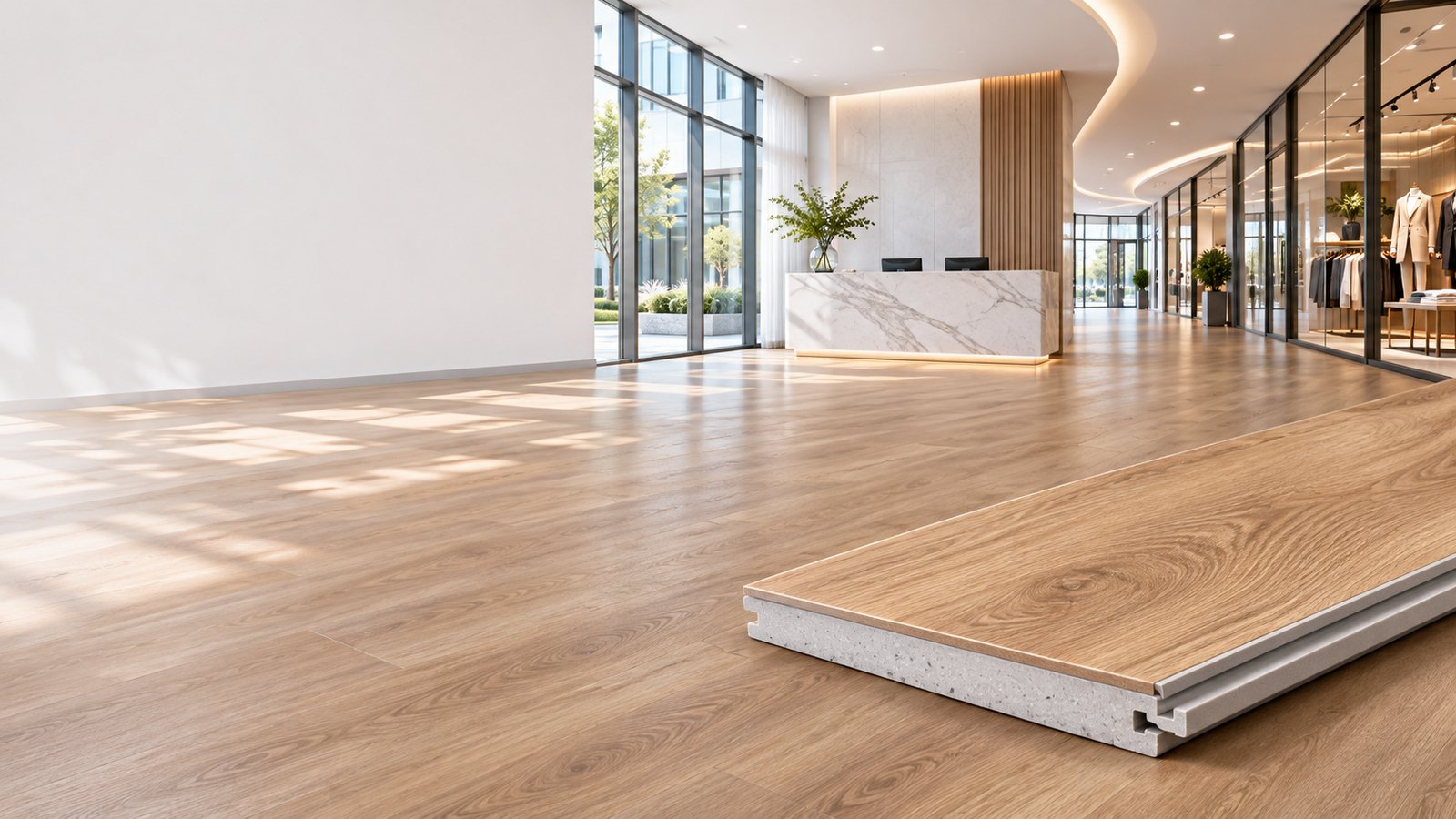
An attached underlay can form part of an impact-sound solution, but the result depends on the complete floor and ceiling construction and test conditions. Request applicable assembly results and coordinate the project's acoustic requirements. An IXPE backing alone does not prove compliance or guarantee quiet guest rooms.